

Memory Care vs. Senior Living: Understanding the Differences in Care, Safety, and Environment
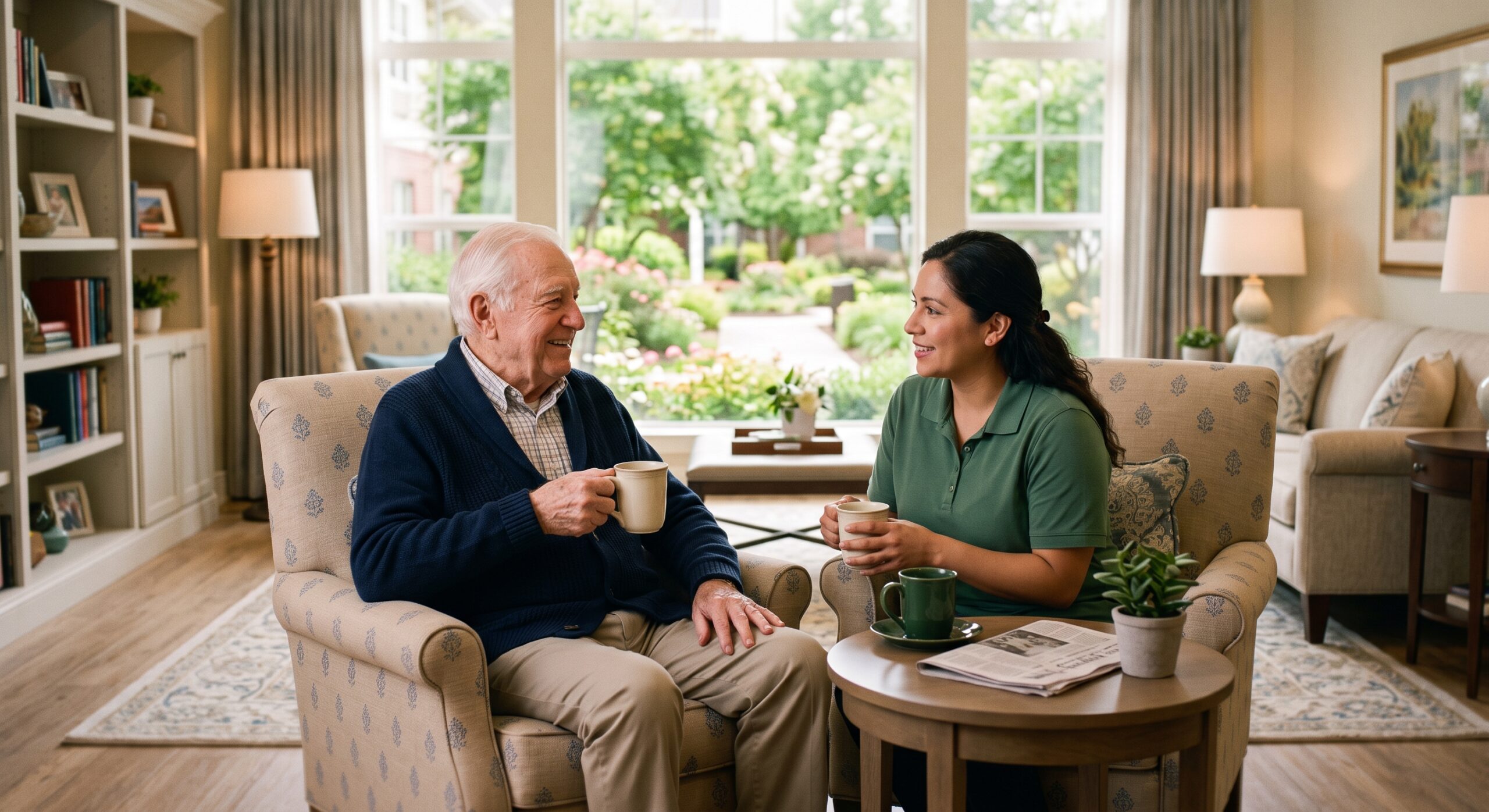
Deciding between general senior living and specialized memory care comes down to evaluating your loved one's daily cognitive, physical, and safety needs. Choosing the right living environment ensures long-term comfort, appropriate daily support, and peace of mind for the entire family.
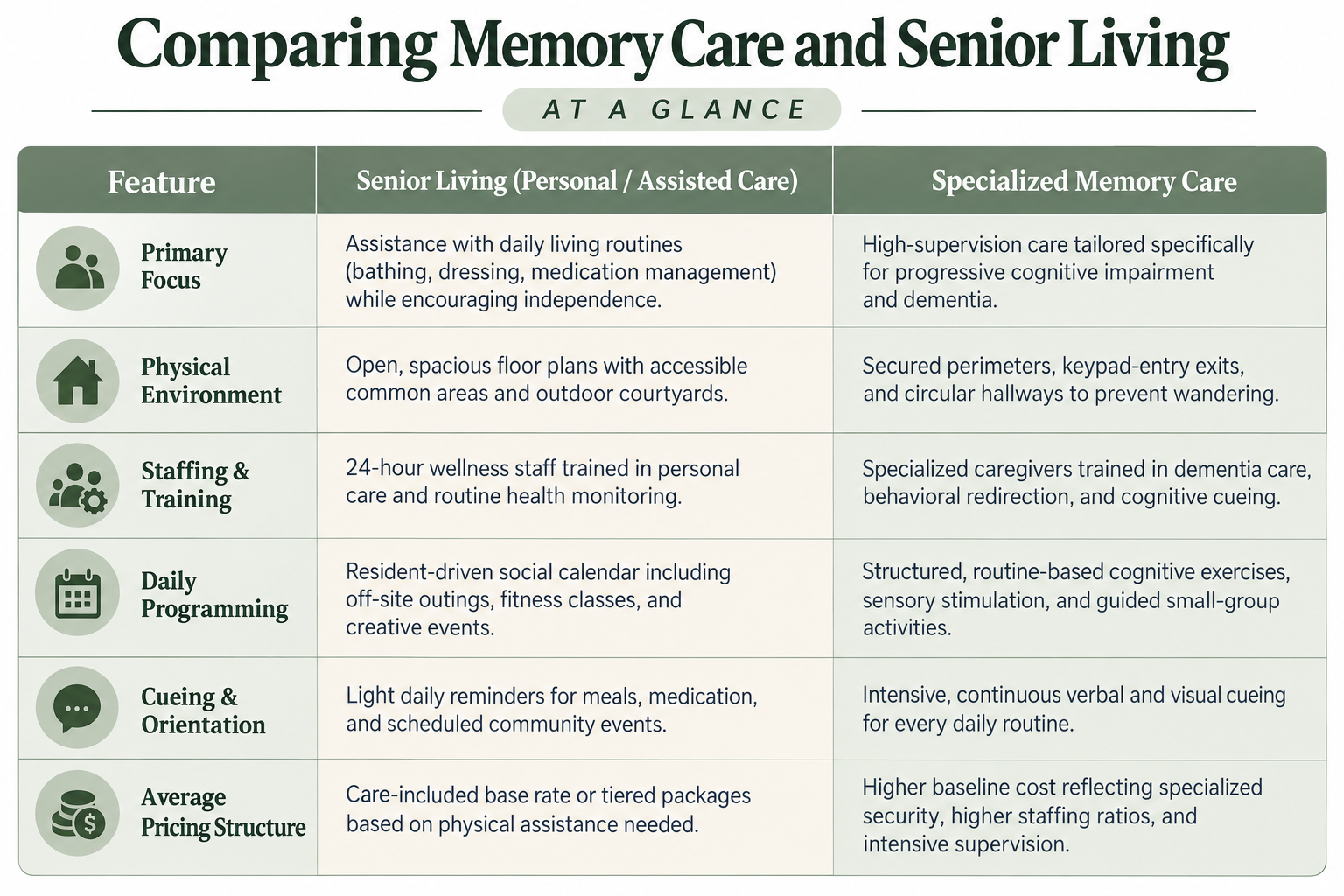
Key Areas Where Memory Care and Senior Living Differ
While both senior living and memory care prioritize resident dignity, health, and social connection, their daily operational focus diverges based on cognitive capability.
1. Security and Physical Layout
General senior living communities offer open, hotel-like environments where residents move freely between private apartment suites, restaurant-style dining rooms, and outdoor courtyards. In contrast, dedicated memory care environments feature secured entryways, delayed-egress doors, and enclosed garden walking paths designed specifically to prevent elopement and reduce confusion. Hallways in specialized memory care wings often follow circular designs without dead ends to prevent frustration for residents who pace.
2. Staff Training and Daily Supervision
Caregivers in personal care settings assist residents with mobility, medication management, grooming, and bathing. Memory care staff receive additional training in dementia communication, managing sun-downing symptoms, sensory soothing, and therapeutic redirection. Staffing ratios in memory care are typically higher to ensure immediate assistance during moments of anxiety or disorientation.
3. Life Enrichment and Cognitive Engagement
Activities in general senior living focus on personal enrichment, local community outings, educational lectures, and group fitness. Memory care activities prioritize cognitive retention and emotional grounding, utilizing music therapy, tactile crafts, reminiscence discussions, and predictable daily rhythms that reduce cognitive fatigue.
Supporting Memory Needs Within Personal Care Communities
A common misconception among families is that any degree of memory loss immediately requires a locked memory care facility. In reality, many older adults experiencing mild cognitive impairment or early-to-moderate Alzheimer's thrive in a supportive personal care community.
At The Grand Residence at Upper St. Clair, our care model supports residents living with memory challenges through patient cueing, routine reminders, and familiar staff presence within our personal care framework. Rather than forcing an immediate transfer to an institutional memory unit, our care team adapts to cognitive changes right inside the resident's private apartment suite.
Benefits of Personal Care for Early to Moderate Memory Challenges:
- Apartment Continuity: Under our signature "No Second Move" philosophy, residents remain in their spacious private suites up to 30% larger than average, preserving emotional security and familiar surroundings.
- Integrated Care Levels: As care requirements evolve, two additional progressive levels of care allow our team to step up daily assistance, cueing, and wellness checks seamlessly.
- Social Normalcy: Residents enjoy restaurant-style scratch-cooked dining and community activities alongside neighbors, preventing the isolation that can occur in restricted wings.
- Consistent Family Atmosphere: Being a family-owned community built on 25 years of care history, our consistent care team builds deep trust with residents, learning their unique personal histories and morning habits.
How to Evaluate Which Setting Is Right for Your Loved One
Determining whether general senior living or specialized memory care is the right fit involves honest evaluation of safety risks and functional abilities.
- Evaluate Wandering and Elopement Risk: If your loved one actively attempts to leave home, misinterprets exit doors, or lacks safety awareness when walking alone outdoors, a secured memory care setting is necessary.
- Assess Daily Orientational Needs: If your relative primarily needs help remembering medicine times, keeping track of meal hours, or getting dressed, personal care with cueing provides excellent support.
- Consider Behavior Changes: Persistent exit-seeking, severe agitation, or unsafe behaviors require the high supervision of dedicated memory care.
- Review Care Continuity Policies: Ask communities if residents can remain in their apartments if cognitive needs increase over time.
Finding Long-Term Peace of Mind
Understanding the distinction between general senior living and specialized memory care ensures your family chooses an environment that balances physical safety with personal dignity. Selecting a community that provides progressive care support allows your loved one to enjoy familiar surroundings, exceptional hospitality, and consistent care as their needs evolve.
If you are exploring care options in Upper St. Clair, Mt. Lebanon, or Bethel Park and want to evaluate how our care-included model supports residents with memory challenges, explore our community blog or connect with our admissions team.
Contact us today to schedule a private tour of The Grand Residence at Upper St. Clair and learn more about our personalized approach to senior living.
Come See It for Yourself
The best way to know if The Grand Residence is right is to walk through the door. Take a tour, meet the team, have lunch if you like. No pressure, no sales pitch, just a chance to see what life here actually feels like.