

Navigating Senior Care Decisions as Siblings: A Guide to Family Harmony
When the time comes to explore supportive living for an aging parent, the decision rarely rests on one person alone. In most families, adult brothers and sisters must come together to evaluate care options, coordinate schedules, and make choices that honor their parents' wishes. While every family member shares the exact same goal of keeping Mom or Dad safe, happy, and well cared for, differing perspectives, communication habits, and past family roles can quickly create emotional tension.
Successfully navigating senior care decisions as siblings does not have to cause division or strain family bonds. Approaching this life transition with empathy, balanced responsibilities, and structured communication allows adult children to work together as a unified team. By focusing on shared values and practical steps, families can turn an emotional turning point into a collaborative, positive experience.
Why Sibling Conversations Around Care Can Feel Difficult
Even in close-knit families, discussing senior living often brings unexpected emotional tension. Recognizing why these conversations feel challenging is the first step toward working through them productively:
- Differing Perceptions of Need: A sibling who lives nearby and handles weekly groceries or doctor appointments often sees daily health declines up close. Meanwhile, an out-of-town sibling who visits only on holidays may feel that their parent is doing just fine, leading to disagreements about whether support is truly needed.
- Old Family Roles Resurfacing: During stressful life transitions, adult siblings often fall back into childhood patterns, such as the eldest child feeling obligated to take complete control, or younger siblings feeling their voices are not heard.
- Emotional Processing Differences: Every person handles change differently. One sibling may process anxiety by diving into logistical spreadsheets, while another needs time to process the emotional reality of a parent aging.
Understanding that these differences stem from love and concern helps everyone stay patient as discussions unfold.
Practical Steps for Building Sibling Consensus
To keep conversations constructive and collaborative, consider these practical guidelines:
1. Schedule a Dedicated Family Meeting
Avoid bringing up senior living during chaotic holiday meals or hurried phone calls. Set aside a dedicated, quiet time for siblings to talk openly. If siblings live in different cities, a scheduled video call ensures everyone participates equally. Begin the conversation by agreeing on the primary goal: supporting your parent's comfort, dignity, and independence.
2. Divide Responsibilities Based on Strengths
Managing a senior living transition involves multiple moving parts. Dividing tasks according to each sibling's natural skills keeps any single person from feeling overwhelmed:
- The Researcher: Gathers information on regional communities, compiles tour questions, and reviews lifestyle calendars.
- The Communicator: Serves as the primary point of contact with community admissions teams and coordinates family meeting times.
- The Logistical Coordinator: Focuses on practical details like measuring furniture, gathering paperwork, and coordinating move schedules.
- The Emotional Anchor: Spends quality one-on-one time with the parent, listening to their hopes and reassuring their feelings throughout the process.
3. Focus on Quality of Life Rather Than Limitations
When discussing options with each other and with your parents, frame the conversation around what a community adds to their life rather than what they are leaving behind. Emphasize freedom from tedious chores, fresh chef-prepared meals, social outings with peers, and the peace of mind that comes from having caring staff available whenever needed.
Collaborative Steps for Evaluating Communities
Working together through the research phase helps all siblings feel confident in the final choice:
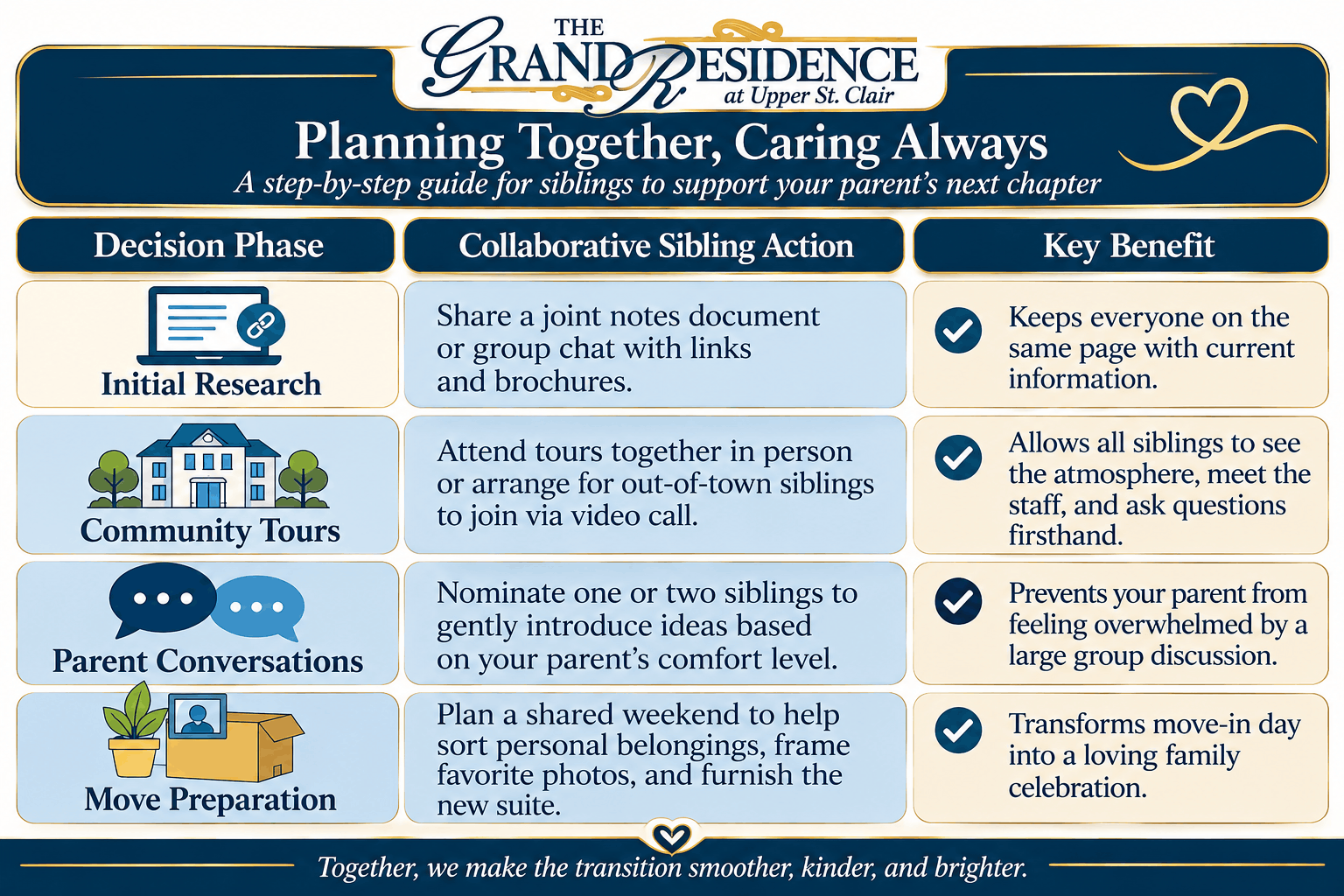
The Grand Residence: Designed for Long-Term Family Peace of Mind
For families in Upper St. Clair, Mt. Lebanon, Bethel Park, and the South Hills, selecting a community that provides long-term stability resolves many sibling concerns from day one.
The Polachek family has guided Pennsylvania families through senior care transitions since 1984. In 2001, Kathi and Bill Polachek custom-built The Grand Residence at Upper St. Clair, creating an environment that feels like a true extension of family. Today, our community offers several key advantages that make reaching consensus simple:
- The "No Second Move" Promise: One of the greatest fears siblings share is that a parent will settle in, only to be forced to move again if care needs change. Under our "No Second Move" philosophy, progressive care levels come directly to your parent's current apartment, preserving their familiar surroundings and friendships.
- Spacious Living Accommodations: Our private suites are up to 30% larger than typical senior accommodations, providing plenty of room for favorite family furniture, personal keepsakes, and visits from grandchildren.
- Home-Style Scratch Dining: Fresh meals cooked daily from scratch by chefs restore the simple pleasure of good food and provide a welcoming place where family members can join their loved ones for a meal.
- Caring, Consistent Leadership: Being locally family-owned for 42 years means our leadership team is always accessible down the hall to answer questions, provide updates, and support your family at every step.
Moving Forward Together
Transitioning an aging parent to personal care is a shared journey. When brothers and sisters communicate with patience, share responsibilities, and keep their parent's happiness at the center of every conversation, navigating senior care decisions as siblings strengthens family bonds and ensures lasting comfort.
If your family is beginning to explore personal care options in the South Hills, we invite you to explore our community blog for helpful guides or reach out to our team with your questions.
Contact us today to schedule a private family tour of The Grand Residence at Upper St. Clair and discover how our welcoming community can bring peace of mind to everyone in your family.
Come See It for Yourself
The best way to know if The Grand Residence is right is to walk through the door. Take a tour, meet the team, have lunch if you like. No pressure, no sales pitch, just a chance to see what life here actually feels like.